Paper Weights | How to Brief gsm Properly
Brief paper weight by how the piece will be used rather than guessing a number, with a job-by-job table of gsm, finish and when to crease.
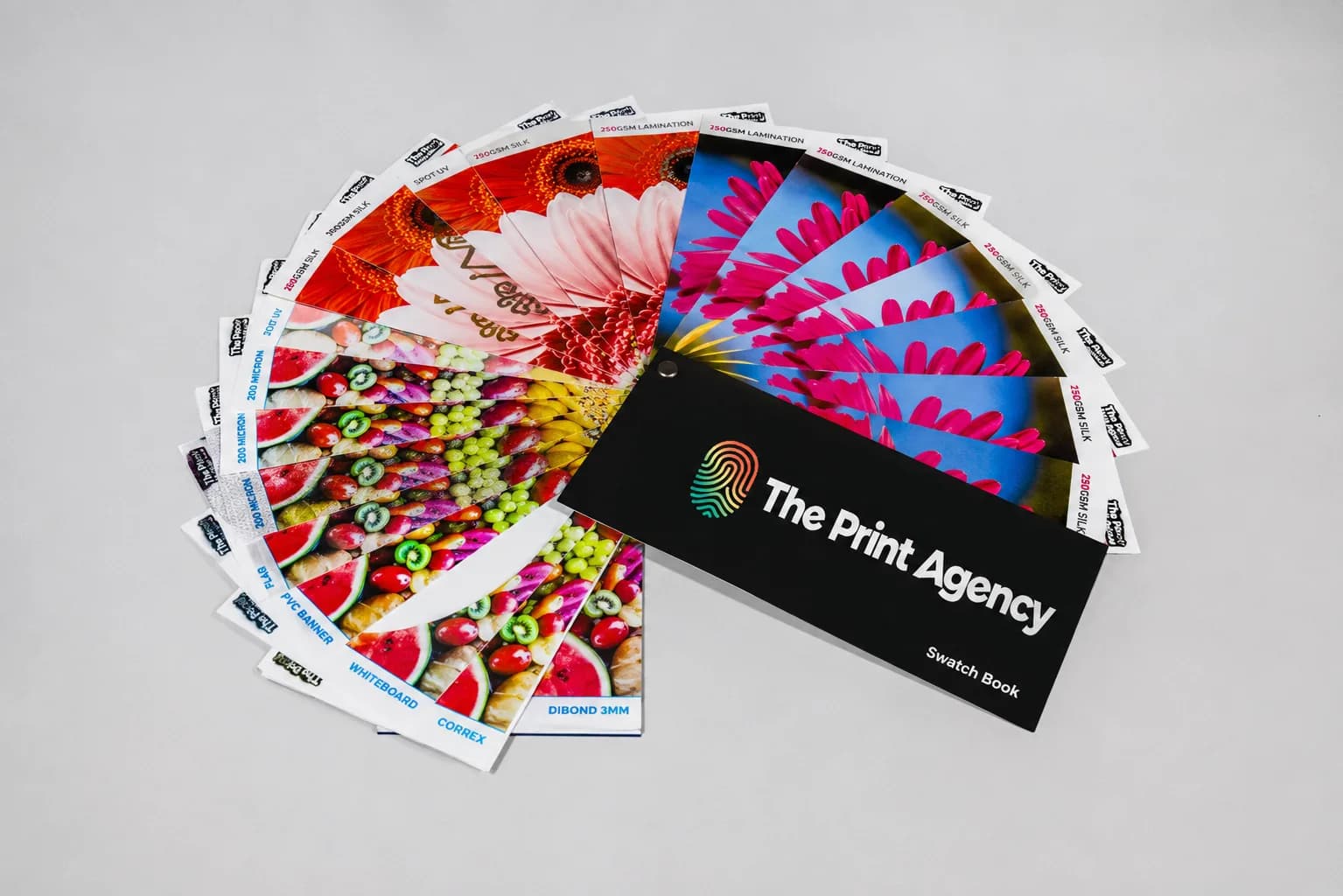
The most useful thing you can tell us about a leaflet isn't a number. It's where it lives, who handles it and how long it has to survive. Give us that and we'll pick the weight, because the number on its own hides the two decisions that actually decide whether the job looks right: coating and creasing.
Still, you'll be asked for a gsm at some point. Here's how to answer without bluffing.
Brief the life of the piece, not the number
When a client says "something nice and thick", we're guessing. When they say "it sits in a rack in a reception area, people pick it up with wet hands off the beach, and it needs to last a season", the spec writes itself.
So tell us:
- where it ends up, whether that's a leaflet rack, a letterbox, a wallet or a table in a wet bar
- how long it needs to stay presentable, and whether anyone writes on it with a biro
- what it should feel like next to the rest of your brand, soft and tactile or sharp and glossy
- whether it's going in the post, because weight bands shift what the mailing costs well before the printing does
That last one catches people out. A brochure that creeps from 98g to 102g finished weight can jump a postal band, and on a 5,000 mailing the postage difference dwarfs any saving you made on paper. We'd rather drop the inner pages from 150gsm to 130gsm and keep you under the line.
Crease it, or watch the fold crack
Folding without creasing is the single most common reason a leaflet comes back looking broken. The surface splits along the fold, the white core shows through your dark cover, and nobody can unsee it.
The trigger isn't weight on its own, which is where the usual rule of thumb falls down. Coating and lamination decide it. A 150gsm matt-laminated cover will crack along a fold because the laminate film and the coating have no give in them, while a 200gsm uncoated sheet often folds cleanly with nothing more than a sharp score, because the fibres are open and they bend rather than break. Dark solid colour across the fold makes any crack ten times more visible than the same fold across a pale background. If you're laminating, crease. If it's uncoated and lighter than about 200gsm, you've usually got away with it, but we'd still crease anything that's going to be folded by machine at volume.
Ask your printer the question outright. "Is that creased or just folded?" is a fair thing to ask, and the answer tells you a lot.
What gsm measures, and what it doesn't
Grams per square metre: the weight of one sheet measuring a metre by a metre, whatever size it's eventually trimmed to. A4 at 120gsm and A1 at 120gsm are the same paper.
Weight is not thickness, and that's where the hand feel comes from. Uncoated stock is bulkier than coated stock at the same gsm, because coated papers carry a mineral layer that adds weight without adding much caliper. Put a 300gsm uncoated board next to a 300gsm gloss art and the uncoated one is visibly thicker and stiffer, the gloss one thinner and more flexible. Measured in microns, a 300gsm uncoated board often comes in around 380 to 400, while a 300gsm gloss art sits closer to 300. If thickness is what you're really buying, ask for the micron figure and compare that instead.
The five bands worth knowing
- 80 to 100gsm is copier paper and letterheads. You can see your hand through it. Fine internally, thin in a customer's hand.
- 115 to 130gsm covers flyers and brochure inner pages. It has snap. An A5 leaflet at 130gsm reads as a printed item rather than a photocopy.
- 150 to 170gsm is where a single sheet starts to feel deliberate, and where show-through stops being a problem on image-heavy pages.
- 250 to 300gsm is card. Postcards, covers, menus. Hold it by one corner and it stays horizontal.
- 350gsm and up is business card and invitation territory, with that audible click when it lands on a desk.
If you're printing double-sided with heavy dark blocks, go up one band from wherever you landed. Ghosting through a 100gsm sheet looks cheap and good design won't rescue it.
Coated or uncoated changes your colour
Coated stock seals the surface, so ink sits on top and holds its density. Uncoated lets ink soak into the fibres and spread a fraction, and the uncoated print standards run a lower total ink limit than the coated ones, so the darkest areas simply cannot go as deep. A navy that reads almost black on silk comes back as a softer midnight on uncoated. Nothing has gone wrong. It's the stock behaving as stock does, and if brand colour accuracy matters, tell us the substrate before artwork sign-off so we can separate for the right profile rather than converting at the last minute.
Silk is the default and deserves to be. Low sheen, strong colour, takes a biro, doesn't show fingerprints.
Gloss makes photography sing, which is why holiday park brochures and point of sale lean on it, but it throws glare under strip lighting and marks on dark areas. Matt looks considered and slightly expensive, with two caveats: solid darks scuff, and heavy coverage can set off in the stack. Uncoated is the honest, tactile one, and it's the right call for appointment cards and anything a vet or a practice manager writes on.
Job by job
| Job | Weight | Finish | Why |
|---|---|---|---|
| Business card | 400gsm | Silk, matt laminated | Matt laminate hides scuffing on dark solids; the board edge still shows a pale core |
| Appointment card | 350gsm | Uncoated | Takes ballpoint without smudging or beading |
| Single-sheet flyer, A5 | 150gsm | Silk | Stands up in a rack instead of curling forward |
| Mailed leaflet, A4 | 130gsm | Silk or matt | Keeps the pack under the next postage band |
| Brochure cover | 300gsm | Matt laminated | Resists handling marks on a cover that gets passed around |
| Brochure inner pages | 150gsm | Silk | Stops dark images ghosting to the reverse |
| Menu, single sheet | 350gsm | Gloss or encapsulated | Wipes clean after a spilled pint |
| Folded menu | 250gsm | Matt laminated, creased | Folds cleanly once it's creased, not before |
| Letterhead | 100 to 120gsm | Uncoated | Has to feed through an office laser printer |
| Poster, indoor A2 | 170gsm | Silk | Enough body to hang flat without waving |
| Loyalty card, short campaign | 400gsm | Silk, matt laminated | Fine for a few weeks in a purse |
| Membership card, long life | 760 micron | PVC | Laminated board in a back pocket delaminates and curls; if it has to last a year, use plastic |
Treat that as a starting point rather than scripture. A luxury brand might duplex two 270gsm boards to 540gsm with a soft-touch laminate and a painted edge, and a recruitment firm getting through 2,000 cards a quarter is perfectly well served by 400gsm silk.
One more thing before you sign anything off: judge colour on paper, not on a backlit screen. Ask for a sample of the actual stock, or a printed proof if the job warrants it.
Send over your artwork or a rough description of what the piece has to do, and we'll come back with a weight, a finish and the reasoning behind both.
Got a project like this?
Send the brief or the artwork over and we'll tell you honestly what we'd do with it.
Talk to Us